
We read and read without really getting engaged. Without your creativity, insight and thoughtful instructional design, learning becomes dull, no matter how efficiently it was produced.
What AI sameness looks like in a course
We've all seen courses where every module follows the same pattern: five information pages, a few generic images, three multiple-choice questions and a summary. The content is accurate. The language is fine. But nothing in the material makes the learner pause, reflect or recognize themselves. Before long, your courses feel surprisingly similar, even when the topics are very different.
One of our customers had used an AI assistant to create the first draft of a one-hour course, split into five chapters. The content was correct, but there was far too much of it and the same messages was repetitng without conection to every day worklife. The customer had built several courses this way, so learners met the same heavy, repetitive pattern every time. Many of them got so frustrated that they stopped before the end.
Together with the customer, we went through one of the courses. We used prompts to strip out much of the repetition, so each point appeared once, where it was needed. We also went through the images and looked at which ones actually supported the content. Finaly we added a scenario with a common dilemma in every chapter.
This example shows: The problem is not the technology itself. More often, it's our willingness to accept the first version instead of shaping it into something meaningful for the audience. If we're not careful, we'll produce courses faster than ever while creating learning experiences that no one remembers, relates to or can put into practice.
AI sameness isn't inevitable, though. AI can generate the draft, but it's still people who make it worth remembering.
Be ruthless when editing the AI draft
I can't be the only one who has been fascinated by how many different ways AI can say essentially the same thing without ever getting to the point.
Generative AI is designed to predict the most likely next word, so its default output leans towards the familiar. It wants to help by structuring information, which means it often fills a template rather than creating something truly tailored. Better prompts help, but in my experience they rarely remove that pull completely (I'd love to hear if you've found a way!).
That's why it's always worth bringing out the red pen. An AI draft is good at producing content. It is less good at deciding what to leave out, or at creating moments where the learner stops and thinks. That part is still your job. So read the draft the way a learner would, and ask yourself: where would I lose interest? Where would I think, I’ve already read this?
In my own work, that often means rewriting the questions. In a short course or chapter, I usually replace the list of learning objectives at the start with a question. I take out information that is repeated. And I keep working on tone and persona all the way through, so the course feels like it was written by someone, not assembled page by page.
Over time, you'll learn how your AI works and editing becomes much faster. Once you've kept only what genuinely helps the learner, the real work begins.
Want to get more out of the AI features in your authoring tool? Our Articulate trainings include a hands-on session on building a Rise course with AI.
Find the stories that matter
Most of us love stories. We love hearing news, helping solve conflicts and learning how someone got through a difficult situation.
"But storytelling doesn't fit every training programme," you might say. I'd argue that almost all learning benefits from storytelling, unless the sole purpose is to replace a manual.
You don't need a complex narrative. A realistic case based on challenges learners actually face, and that highlights your most important message, is a great start. AI can help you write and visualize these scenarios, but the relevance has to come from real-world experience.
How do you find the right case? Talk to your colleagues and ask what challenges they face in their daily work. Cases that feel authentic make learning stick. Without them, you risk missing the mark entirely, either by aiming too high or too low.
Dare to stand out
Left to its defaults, AI smooths things over and makes everything feel comfortably average. That's rarely a good combination when we know how quickly people become bored.
Fortunately, a little creativity goes a long way, and this is where AI truly shines. Giving your learning experience a distinct look and feel has never been easier, with countless ways to create graphics, images and videos.
Take your videos to the next level by introducing memorable characters, for example in Vyond, where you can create your own characters and build scenes around them. Let them stand out a little. Let them say things that don’t feel perfectly polished. That helps learners remember what happened and how it was handled.
For inspiration, think about the characters in your favourite TV series. Which ones do you remember most, and why? Borrow what works and spend some time writing dialogue that feels authentic.
Add interactivity that makes learners think
Experienced learners quickly recognize a generic multiple-choice question. AI can give you a first set of questions in seconds, so invest the time you save in meaningful questions and feedback that reinforce your key messages. That's what brings you closer to the outcomes you're aiming for.
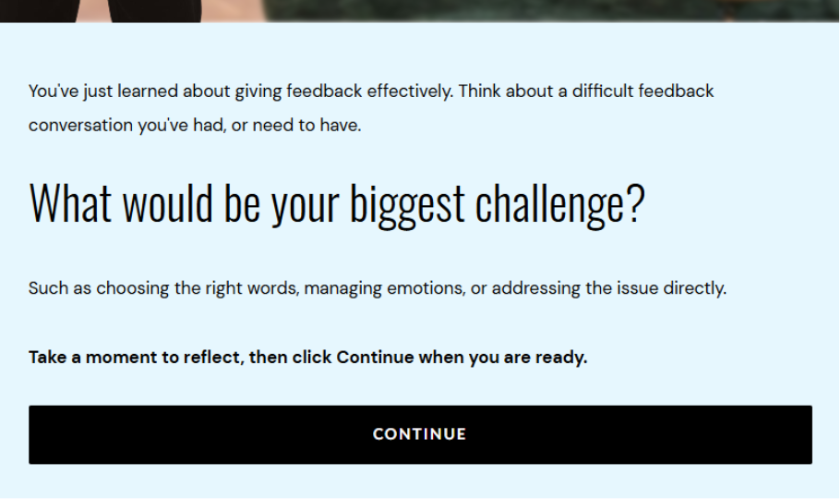
And think beyond quizzes and knowledge checks. Add purposeful interactivity so learners can test ideas, reflect and form opinions, without necessarily having a right or wrong answer. Even when the results can't easily be measured, there's real value in moments where people pause and think.
Looking ahead
AI will keep making content production easier. But if we want learning that leads to real-world action and behaviour change, we still need to contribute what technology struggles most to replicate: creativity, relevance and a genuine understanding of the people we're trying to reach.
FAQs: AI sameness in eLearning
What is AI sameness?
AI sameness is the tendency for AI-generated content to be technically correct but increasingly uniform and predictable. In eLearning, it shows up as courses that follow the same structure, use similar examples and ask generic questions, so learners struggle to tell one module from the next and remember little of either.
Is AI sameness really a problem if the content is accurate?
Yes. Accurate content is essential, but it is rarely enough to create learning that leads to behaviour change. If learners don't engage with the content, reflect on it or recognize themselves in it, there's a real risk that the key messages are forgotten, even when the information itself is correct.
How can I tell if my training is affected by AI sameness?
Imagine swapping the topic and the audience. If the course would still feel largely the same, it probably lacks relevance and distinctiveness. Common signs are generic examples, repetitive phrasing, predictable quiz questions and a lack of stories, dilemmas or real-world situations.
Do I have to choose between efficiency and quality when using AI?
No. AI is an excellent tool for getting started faster, organizing information and producing first drafts. The challenge is not stopping there. The best results come when AI is combined with human creativity, subject matter expertise and a deep understanding of the audience. That way, you save time and still create learning that makes a genuine impact.
Want to talk more about this?
Want to read more on similar topics?
5 Articulate Rise Features You're Probably Underusing
Help subject matter experts create courses