
If you're looking for new ways to increase engagement, add variety or solve common design challenges, why not try out our five Articulate Rise features that have far more potential than many course creators realize?
1. Multiple quizzes: Create a more balanced learning flow in Articulate Rise
A common approach to measure knowledge in Articulate Rise is to build an entire course and finish with one large quiz. It makes sense; Rise only reports the result of a single quiz to your LMS, so it's tempting to save all assessment questions for the end.
The problem with that approach, is that learners will spend most of the course consuming information and only start testing their understanding once they've reached the finish line.
A more effective approach is to spread shorter quizzes throughout the course. By following each lesson with a few questions, you create a more balanced flow that alternates between learning and doing. This not only reinforces key concepts by requiring learners to recall and apply what they've just learned, it also gives learners regular opportunities to check their understanding before moving on – and if needed, to scroll back and review.
While Articulate Rise can only send the result of one quiz to your LMS, you can require learners to achieve a passing score on each quiz before continuing. This means that by the time they complete the final assessment, they've already demonstrated understanding throughout the course.
Using this Articulate Rise feature results in a more active learning experience, with quizzes as a natural part of the learning journey rather than an obstacle at the end.
2. Block templates: The Articulate Rise feature that saves time and ensures consistency
With Rise being so quick and easy to use, it's understandable why many creators overlook block templates. But why spend time creating your own combinations of blocks when everything you need is already available in the block library?
Here too, the answer comes down to convenience. As course creators, we tend to reuse what works and what our learners are already familiar with. The result is often that we rebuild the same layouts and interactions again and again. It’s also very common that we end up doing the same manual adjustments to align the content with our brand for each block instance; changing background colours, tweaking spacing, rounding corners and so on.
Individually, those changes only take a few seconds. But across dozens of courses, and especially across a team of creators, small variations can quickly creep in and create inconsistencies.
By creating your own block templates, you can save commonly used layouts, standardize styling and share approved designs with the rest of your team. This not only speeds up development but also helps ensure a more consistent experience for learners.
That's where the real value of block templates lies: making it easier to create the same thing well.
3. Scenario blocks: Close the gap between theory and practice in Articulate Rise
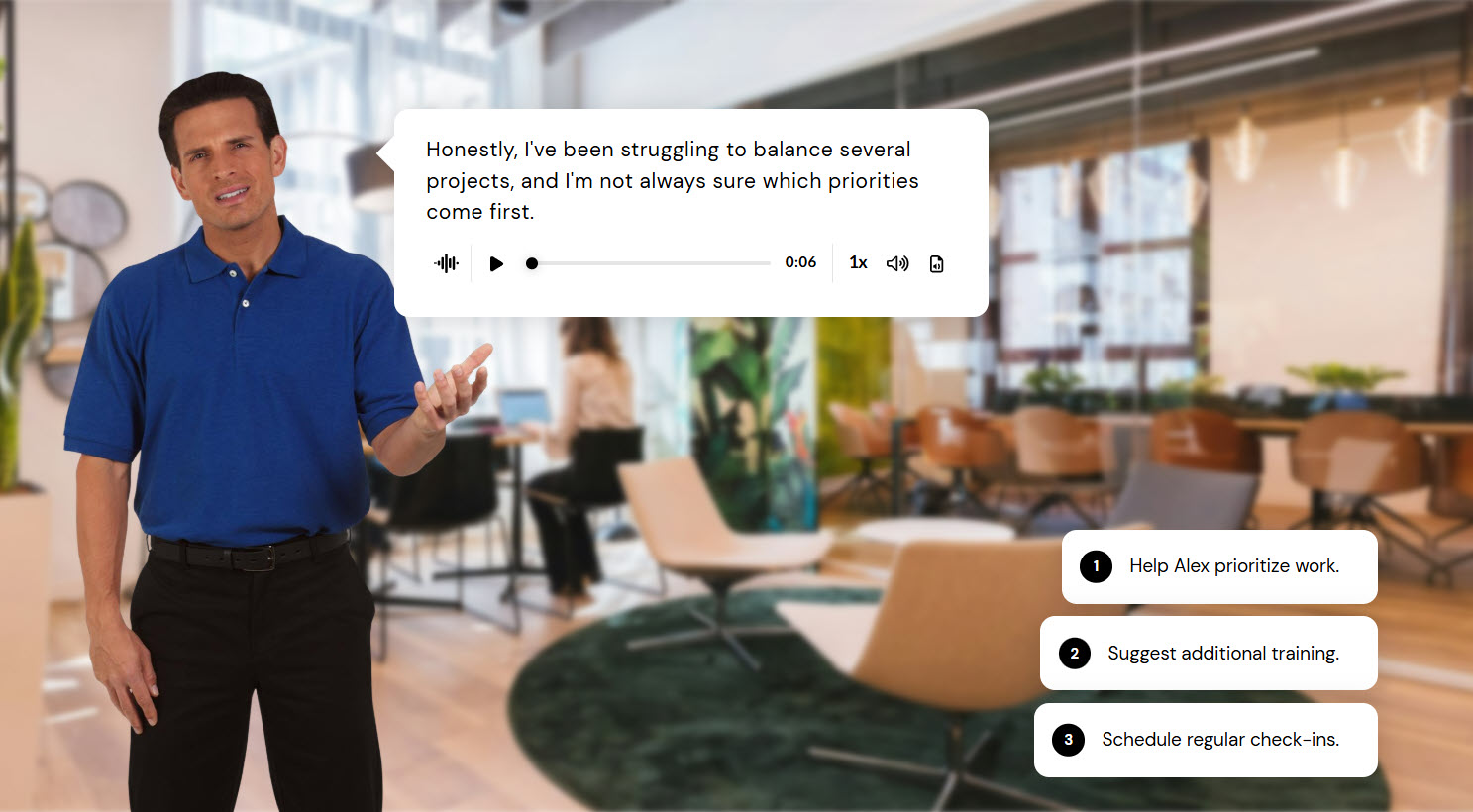
Because they're so often associated with compliance and customer service training, scenario blocks are easy to dismiss when designing other types of learning experiences. In reality, this Articulate Rise feature is useful whenever learners need to make decisions, apply knowledge or navigate situations they might encounter in the real world.
This makes scenario blocks particularly effective for exploring nuance and illustrating the gap that often exists between theory and practice. A policy can tell us what to do, but a scenario allows us to practise how to do it when the situation is less than straightforward.
Whether you're designing for leadership conversations, complex sales meetings, onboarding challenges or unexpected situations at work, the possibilities are almost endless. Any topic that requires judgement and decision-making can be brought to life through a scenario.
And if the built-in characters aren't your style, you're not stuck with them. They can easily be turned off in the first scene, leaving only the background (you can even upload your own). Combined with audio support and AI-generated voiceovers, scenario blocks can become surprisingly immersive experiences.
The real strength of scenario blocks isn't that they test knowledge. It's that they allow learners to practise using that knowledge.
4. Continue blocks: Create meaningful moments for reflection
Continue blocks are often used to break longer lessons into smaller chunks and ensure that learners complete all steps and interactions before moving on. But we can use them beyond controlling navigation.
Used thoughtfully, this Articulate Rise feature can create natural moments for pause and reflection. For example, you might present a scenario, question or new concept and ask learners to consider how it relates to their own work before revealing the answer or recommended approach. You could even encourage them to jot down a thought, decision or action they would like to take.
Only after they've had a chance to think do they click Continue and move on to the next part of the lesson, where they receive feedback, see an alternative perspective or compare their response with a suggested solution.
This small shift transforms the continue block from a navigation tool into a learning tool. Rather than simply clicking their way through the content, learners are given opportunities to process information, make connections and engage more actively with what they're learning.
Sometimes the most valuable learning happens in the pause before the click.
5. The sorting activity block: This Articulate Rise feature also allows learners to make decisions
Most Rise creators are familiar with the sorting activity. Yet when you look at how it’s used, it's often limited to simple "put the right thing in the right category" exercises.
But what if we designed our cards and categories to encourage reflection, judgement and problem-solving instead of simple matching? The difference may seem small, but it changes the type of thinking we ask learners to do.
For example, learners could:
- Sort statements into Facts and Assumptions to challenge their preconceptions and encourage critical thinking.
- Sort action points into Do it immediately and Do it later to practise prioritization in leadership or project management scenarios.
- Sort feedback examples into Constructive feedback and Non-constructive feedback to reinforce effective communication skills.
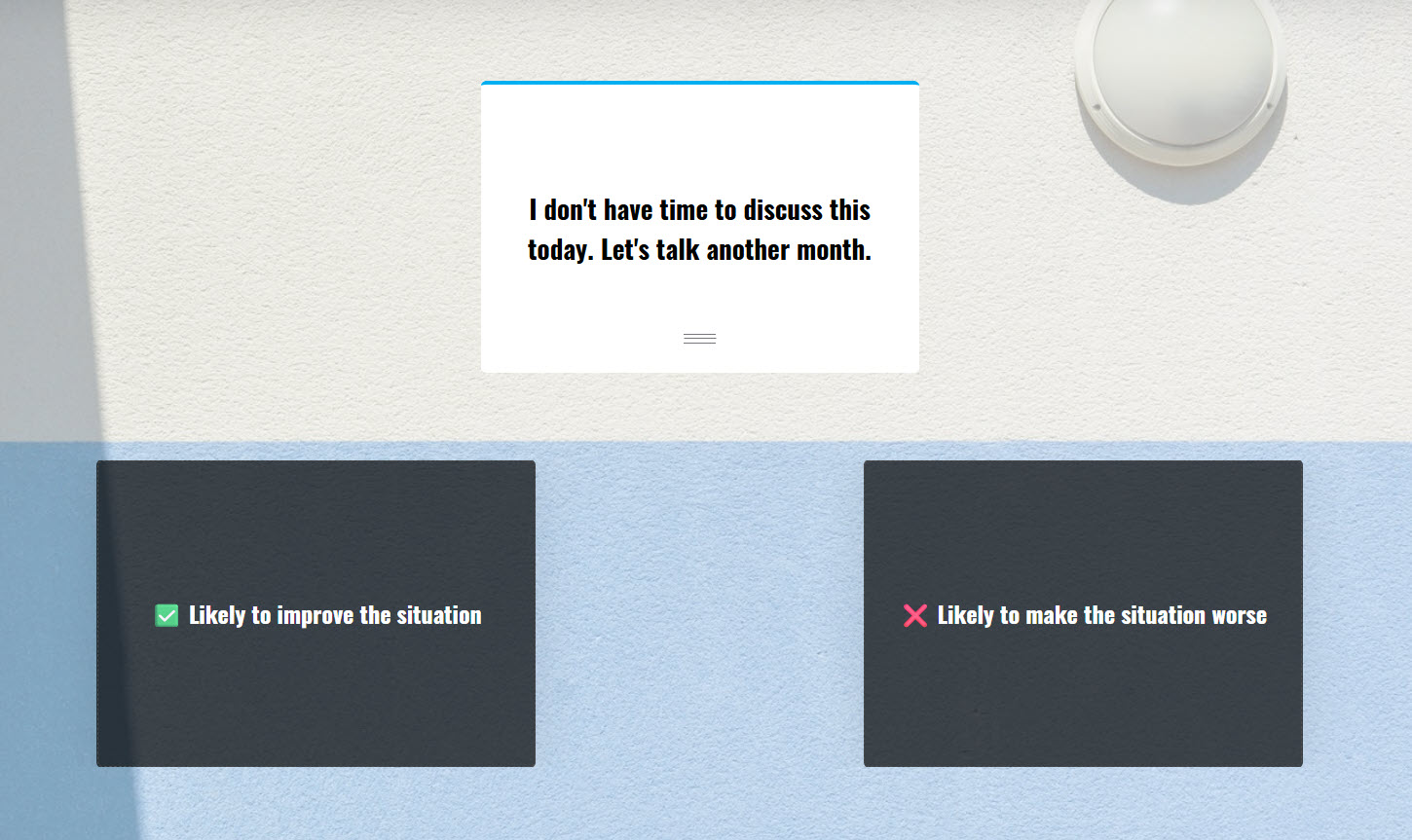
- Sort responses into Likely to improve the situation and Likely to make the situation worse during a difficult customer conversation.
These activities don't ask learners to recall information. They ask them to make decisions.
A simple shift from "Which category does this belong to?" to "What judgement do I want learners to make?" transforms the sorting activity from a categorization tool into a decision-making tool.
And that is where the real learning happens.
Always ask how the features in Articulate Rise could engage learners the most
Hopefully, these examples have given you some inspiration for your next Rise course. In the end, great learning design isn't always about having more features. It's about seeing more possibilities in the ones you already have. You can get there if you ask yourself: How can my existing features engage learners the most? How can these features help me to make the most impact?
The next time you start building a course in Rise, challenge yourself to use a familiar block in an unfamiliar way. You might discover that some of the most powerful possibilities have been hiding in plain sight all along.
FAQ
Can Articulate Rise track multiple quizzes?
Articulate Rise can only report the results of one quiz to your LMS. However, you can require learners to achieve a passing score on multiple quizzes throughout a course before they're allowed to continue. This makes it possible to spread assessment and knowledge checks throughout the learning experience rather than saving everything for the end.
When should I use a scenario block?
Scenario blocks are useful whenever learners need to apply knowledge, make decisions, or practise judgement in a realistic context. While they're often associated with compliance or customer service training, they can be equally effective for leadership development, sales training, onboarding and other situations where learners need to navigate real-world challenges.
How can I make Articulate Rise courses more engaging without adding complexity?
Often, the answer isn't adding more content or more advanced interactions. Instead, it's about using existing features more intentionally. Short quizzes, reflection points, scenario-based activities and decision-focused sorting exercises can all increase engagement while remaining quick and easy to build in Rise.